PolySkin: the first meltable package
Pavement products came in cardboard boxes with plastic liners for forty years. One had to be cut off and hauled away, the other went into the melter and would not melt. We were the first to make the package an ingredient instead, and the industry has been following since.
How it came about, what it had to do, and the answer to the one question we get asked about it.
Published January 1, 2019 · Updated September 30, 2026
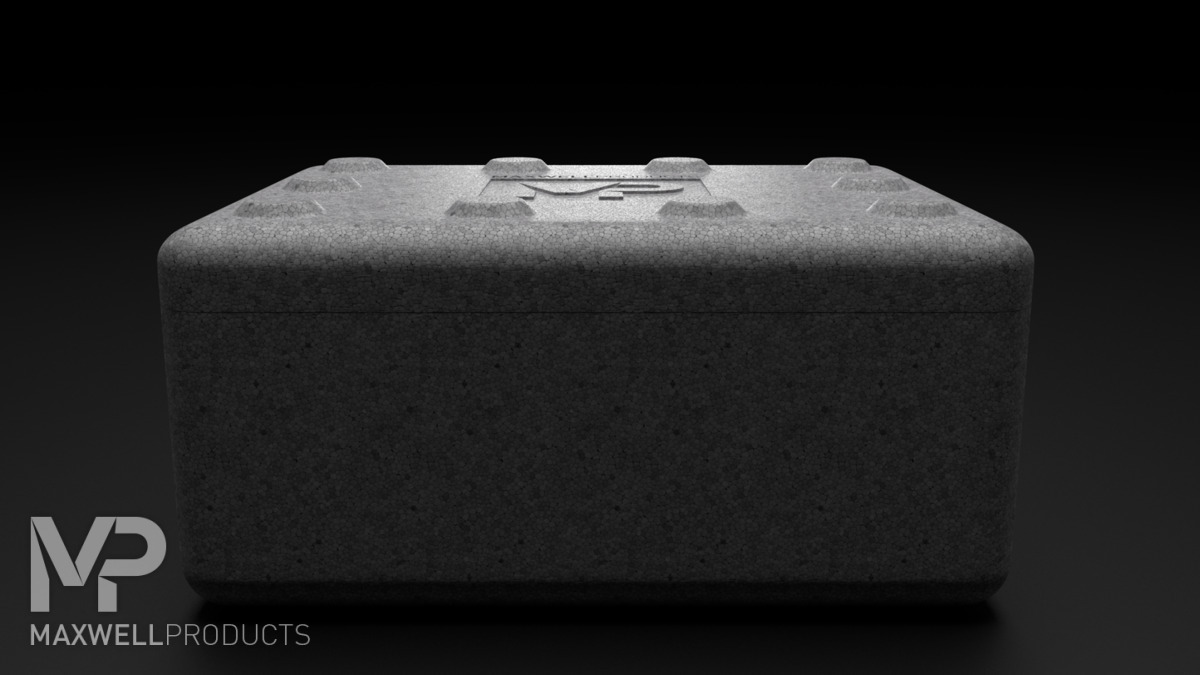
Every package a crack sealant has ever come in had to be dealt with before the work started. Cardboard had to be cut off and carried away. Plastic liners went into the melter and stayed there, tangling agitators and settling on the intake.
The idea behind PolySkin is that the package stops being a separate thing you handle. It is simply part of what you melt.
What it replaced
Pavement maintenance products have been packaged in cardboard boxes with plastic bags or liners since the late 1970s. Both parts of that cause work.
The plastic goes into the melter with the material and does not reliably melt. It wraps agitators, settles onto intake valves, and leaves remnants stuck to the inside of the kettle that somebody has to get out later. The cardboard never goes in, which means it has to come off and then be collected, hauled and disposed of. On a plain carton that starts with a knife, on a job site, in gloves, which is the problem ZipBox solves for the products that still ship in cardboard. It does not solve the other half: the box still has to go somewhere.
Neither of those is the job anybody is being paid to do. They are both time spent on the packaging instead of on the pavement.
“PolySkin opened a lot of doors to us. When we came out with PolySkin, it allowed us to focus on quality materials, because customers could see it was a premium product. We can brand PolySkin, mold it, color it. It just sets us apart.”
Ken MaxwellChief executive, Maxwell Products
It started with lunch
The idea was not new. Ted Maxwell, who founded the company and was its first chemist, had wanted a meltable package for years and had tried at it more than once.
A meltable plastic wrapper would melt, but it would not hold a pallet up. Plastic buckets held their shape, but melted slowly and put too much incompatible plastic into the material. The requirement was awkward: something rigid enough to stack and ship, and compatible enough to dissolve into a sealant without changing it.
The answer turned up in the lab entryway, in somebody's lunch.
Foam outside, sealant inside
There is no boundary here that a crew has to deal with. The shell is the package and the block is the product, and both go the same way: into the melter, at the same time, with nobody separating them first.
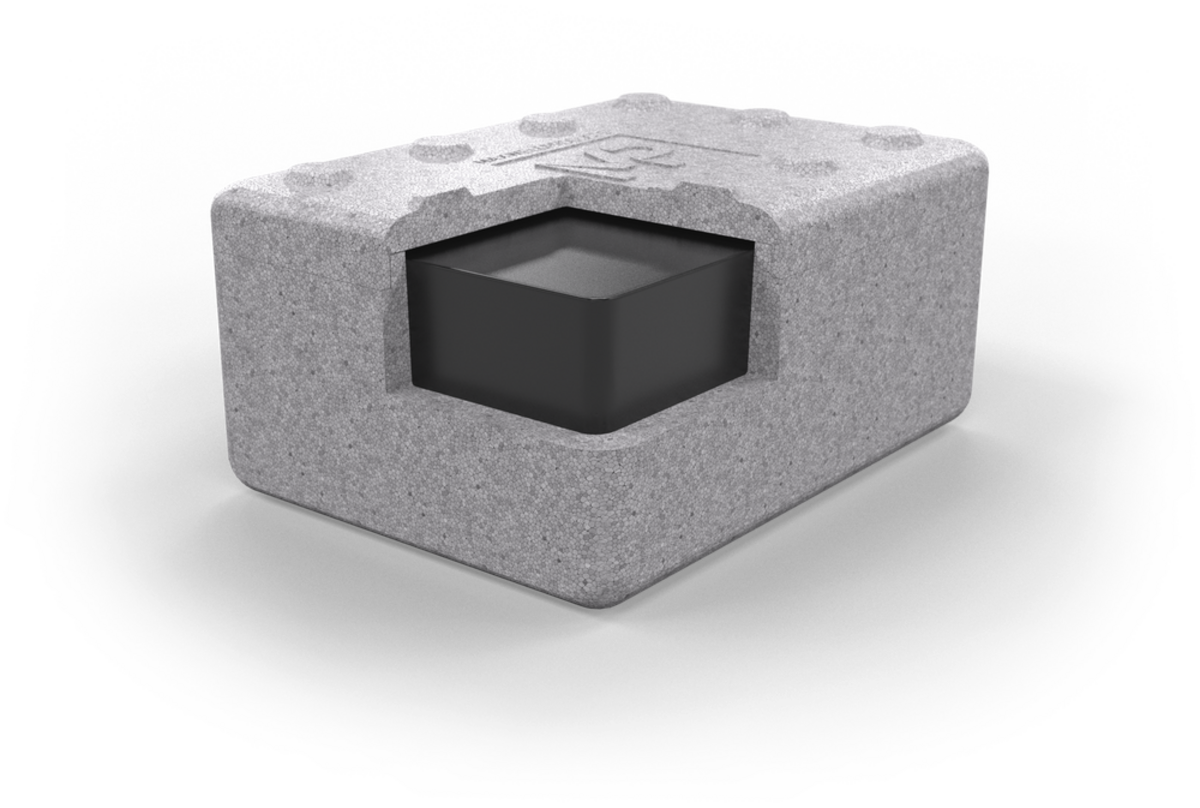
“I was in the lab contemplating meltable packaging. One of the salesmen walked into the entry of the lab, and he had his lunch in a [styrofoam] takeout container. After a while, I finished answering his questions, and he set his lunch in the entry of the lab and forgot it, walking away. In my peripheral vision I can see this container, and I thought, I wonder. I took it, brushed out the crumbs, and walked back to the packaging bay. I measured the temperature of the sealant being packaged, had them stop the line, and filled the container with material. After leaving it overnight, I noticed the packaging wasn't melted or damaged. The next day, I went out and bought a case of [styrofoam] takeout containers. I filled them all up and spread them over the floor of the packaging bay. I'm pretty sure the guys on the packaging line thought I was nuts.”
Mike GuymonMaterials engineer, Maxwell Products
From a takeout box to a pallet
What followed was several years of prototyping, because a foam box that survives one night of hot sealant is a long way from a package that ships.
It had to melt quickly and completely, and it had to be made of polymers compatible with the material it was going into, so that it mixes in rather than sitting in the kettle as clumps. It had to survive the filling line, which turned out to shape the design as much as anything. And it had to build a pallet that stood up.
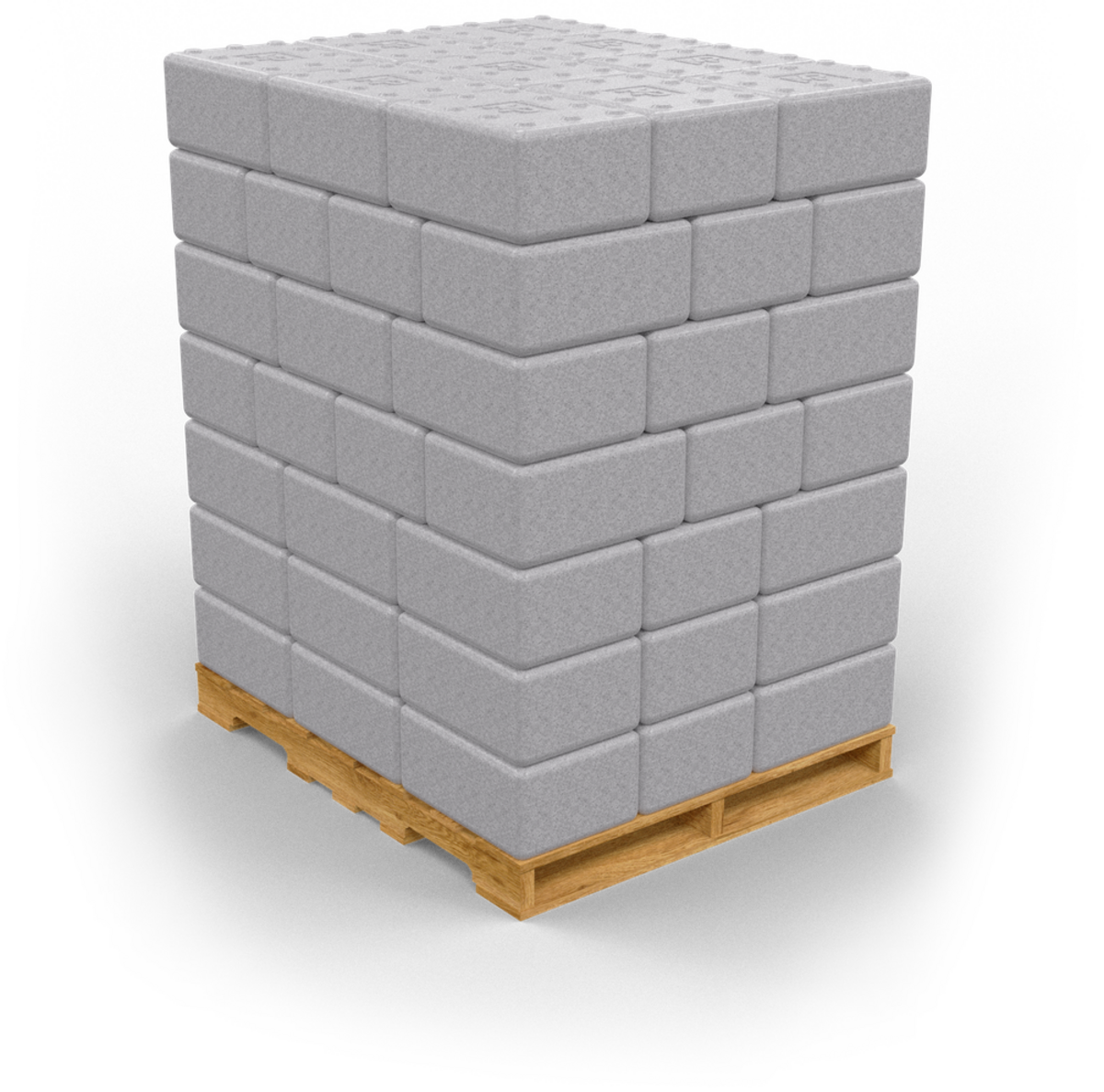
That last requirement is where the shape came from. The early prototypes shifted in transit, so the containers were molded to interlock, the bosses on the top of one block seating into the base of the next, the way the pallet above shows. A wrapped pallet of PolySkin does not need the wrap to stay standing, and it does not sag, slump or topple when it comes off. It stores outside.
A pallet that holds itself up
The bosses on top of each block seat into the base of the one above, so a column of them is locked together rather than balanced. Take the stretch wrap off and nothing moves.
That is why it stores outdoors and survives being handled on a job site, and it is the requirement that gave the block its shape.
“The prototype containers had a tendency to shift some during shipping, and we knew we had to fix it. My initial concept drawings for a solution looked a lot like building blocks, which just made it all that much cooler.”
Brent MaxwellMarketing director, Maxwell Products
Make the package an ingredient, and there is nothing left to take off, carry away or fish out of the kettle.
Everyone makes one now
Maxwell got there first. Ted had wanted a meltable package for years, Mike found the shape of the answer in a takeout container, and Ken had to go and sell a foam box to an industry that had always used cardboard.
Meltable packaging is normal now, and that is the part worth being pleased about. It stopped being our idea and became how the industry works.
“I think PolySkin has inspired the entire industry to put more focus on innovation. I think it taught many in the industry that just because we have always done things one way, doesn't mean we can't do it better.”
Brent MaxwellMarketing director, Maxwell Products
Does it clog the melter?
This is the question we get asked, and it is worth answering plainly rather than dismissing, because it is a reasonable thing to worry about. Anyone who has run plastic liners through a kettle has good reason to distrust the idea of putting packaging into it deliberately.
The answer is in the material. PolySkin is expanded bead foam, which floats. While it is melting it stays at the top of the melter, and the material intake is at the bottom, so the packaging and the intake are never in the same place at the same time. It is not that the foam clears the intake quickly. It is that it does not get there.
The rest follows from the polymers being chosen for compatibility with the sealant: it melts in rather than staying as clumps, and it does not wrap the agitator the way a sheet of liner does.

“Our experience has been plug-and-play. We have two Crafco EZ100s and have experienced no noticeable clogging or any other negative effects.”
Pat MendickMiktom, Inc., Omaha, Nebraska
“Time is money to our customers. If they're spending so much time nursing their kettles, they're not getting the work done.”
Mike GuymonMaterials engineer, Maxwell Products
Ask for a pallet and see what your crew does with the twenty minutes
Talk to us800.266.2090
maxwellproducts.com