
The case for crack sealing
Rebuilding a road costs more every year. The fuel taxes that pay for it have not risen since 1993.
What the research says about sealing cracks before they become something else.
Published October 19, 2018 · Updated September 30, 2026
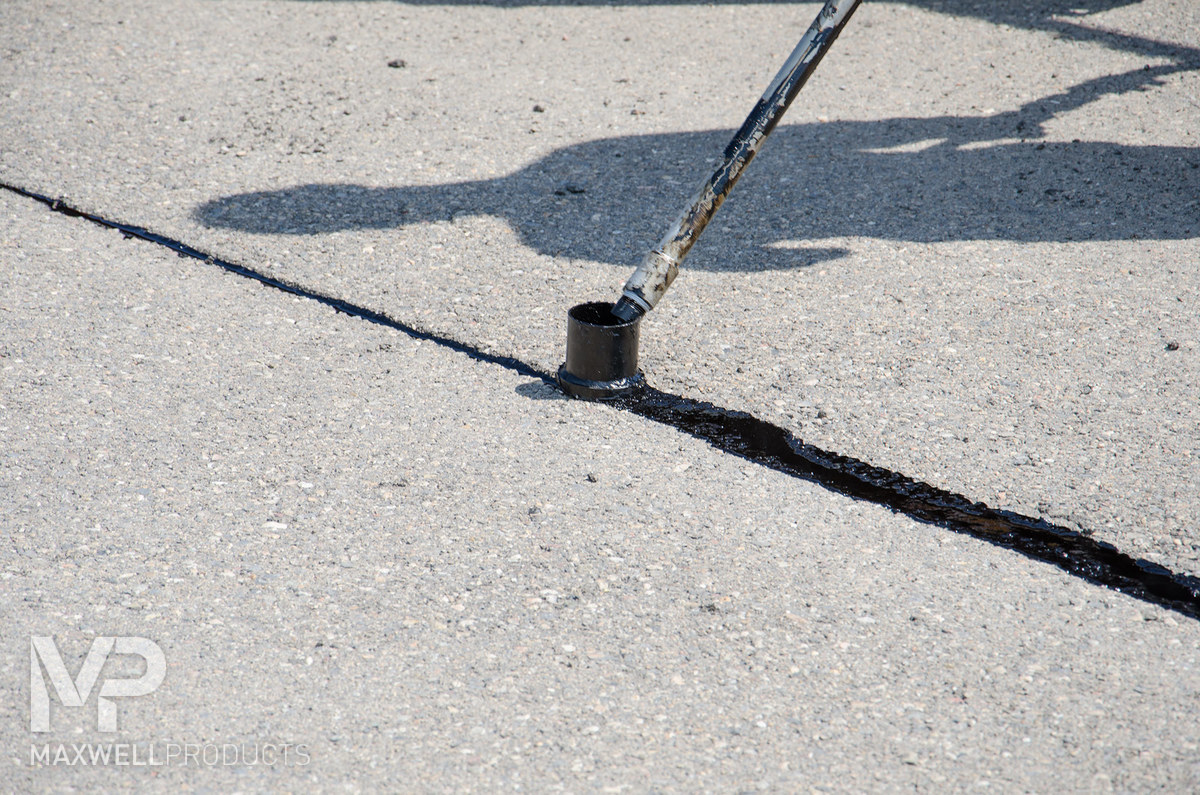
Every agency responsible for pavement makes the same decision every year: spend a little now, or a great deal more later. What has changed is how much later costs.
The argument for crack sealing has not changed in forty years of research. The arithmetic behind it has moved sharply in its favor.
Rebuilding got expensive
The Federal Highway Administration keeps its own index of what highway construction costs, and it has moved a long way. Over the three years to the third quarter of 2024 the index rose about 60 percent. General inflation across the same three years was about 15 percent.
That gap is the point. This is not the wider economy getting more expensive and taking roads with it. FHWA notes the index has been pulling away from both consumer and producer price measures since 2022, which it says may indicate that cost factors specific to highway construction are driving it. A budget written against 2021 prices buys a lot less pavement than it did.
Where the money comes from
The Highway Trust Fund pays for a large share of this work, and it is funded by federal fuel taxes of 18.4 cents per gallon of gasoline and 24.4 cents per gallon of diesel. Those rates were set in 1993 and have never been adjusted. A gallon taxed at 18.4 cents in 1993 raises well under half that in real purchasing power today.
Better fuel economy and electrified vehicles have narrowed the base further. The Congressional Budget Office expects the fund to take in $44.2 billion this year against $61.4 billion in outlays, to exhaust its balances in 2028, and to accumulate a shortfall near $295 billion by 2036.
None of that is an argument about politics. It is the operating condition every pavement budget now works inside: the work costs more every year, and the tax rate funding it has not moved since 1993.
“The consequence of not sealing cracks is increased life cycle cost of the pavement. Pavements that are not crack sealed will continue to deteriorate, and more aggressive and costly treatment may be required in the future.”
R. Buzz Powell, PhDAssistant director and test track manager, National Center for Asphalt Technology, Auburn University
What sealing actually does
A crack is not a cosmetic problem. It is an opening into the structure. Water runs through it into the base course, and a saturated base stops supporting the pavement above it. In cold climates that same water freezes and wedges the crack wider than it was.
Incompressible material, grit, stone, debris, does the other half of the damage. It falls into the crack, and when the pavement expands in heat it has nowhere to go, so it works against the crack walls and pulls material loose.
Sealing closes the route. That is the whole mechanism, and it is why the treatment is judged on whether the seal stays bonded and flexible through a freeze cycle rather than on how it looks the day it goes down.
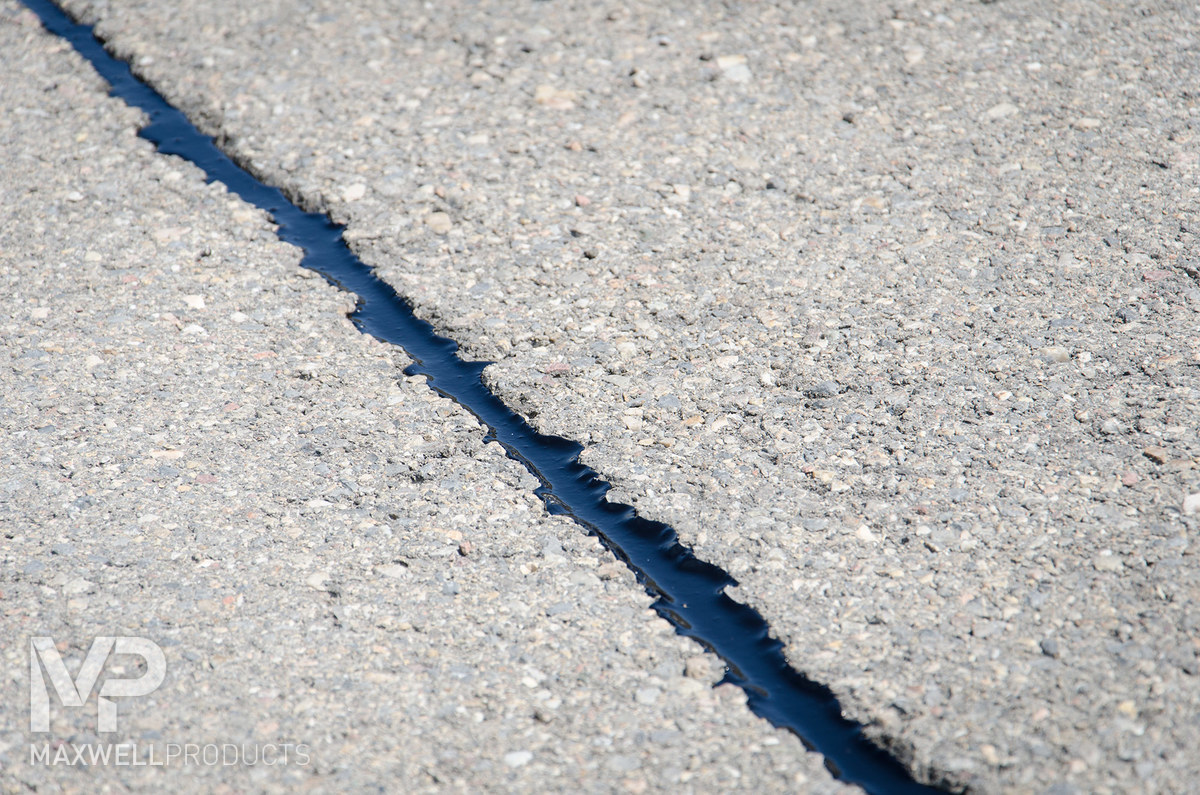

Pavement does not get cheaper by waiting, and the treatment that would have worked is rarely the treatment still available.
What the studies found
The research is unusually consistent for pavement work, and it is not new. Studies by the Ministry of Transportation in Ontario through the 1970s and 1980s concluded that sealing cracks is a cost-effective preventive treatment that extends the service life of asphalt pavements by two to five years.
A 2011 Ohio DOT study with FHWA surveyed sealed and control sections for five years. Sealing produced a performance gain regardless of pavement type or prior condition, 2 to 7 points on the pavement condition rating, averaging 3.9, and statistically significant at 95 percent confidence. Its models put the additional service life at 0.1 to 3.66 years, depending on pavement type and the condition it was in beforehand. That is a wide range, and the top of it is not the ordinary case.
Where on that range a job lands depends mostly on when it is done. The Ohio study found the effect most pronounced on pavement still rated between 66 and 80, and its cost analysis found sealing economically viable in the narrower band of 66 to 70. Sealing is a treatment for pavement in reasonable condition. Applied to a road already failing, it is the wrong tool, and the study says so.
| Study | Published | What it found |
|---|---|---|
| Ministry of Transportation, Ontario | Published 1996 | 2 to 5 years of added service life |
| Ohio DOT with FHWA | 2011 | 0.1 to 3.66 years added; 2 to 7 PCR points, averaging 3.9 |
“All our research on the NCAT Pavement Test Track, Lee Road 159, and US-280 tells us that crack sealing inhibits new cracking as a stand-alone treatment and reflective cracking in combination with other treatments. This benefit is observed in both short-term and long-term performance.”
R. Buzz Powell, PhDNational Center for Asphalt Technology
Cents per foot against a repaving bill
Crack sealing is priced in cents per foot plus labor, or by the ton of material per mile. Resurfacing and reconstruction are quoted in a different order of magnitude, and a repaving project across a few miles of multi-lane road runs well into the millions.
It does not replace paving. It buys years before paving is needed, which is the only lever left when the budget is fixed and the prices are not.
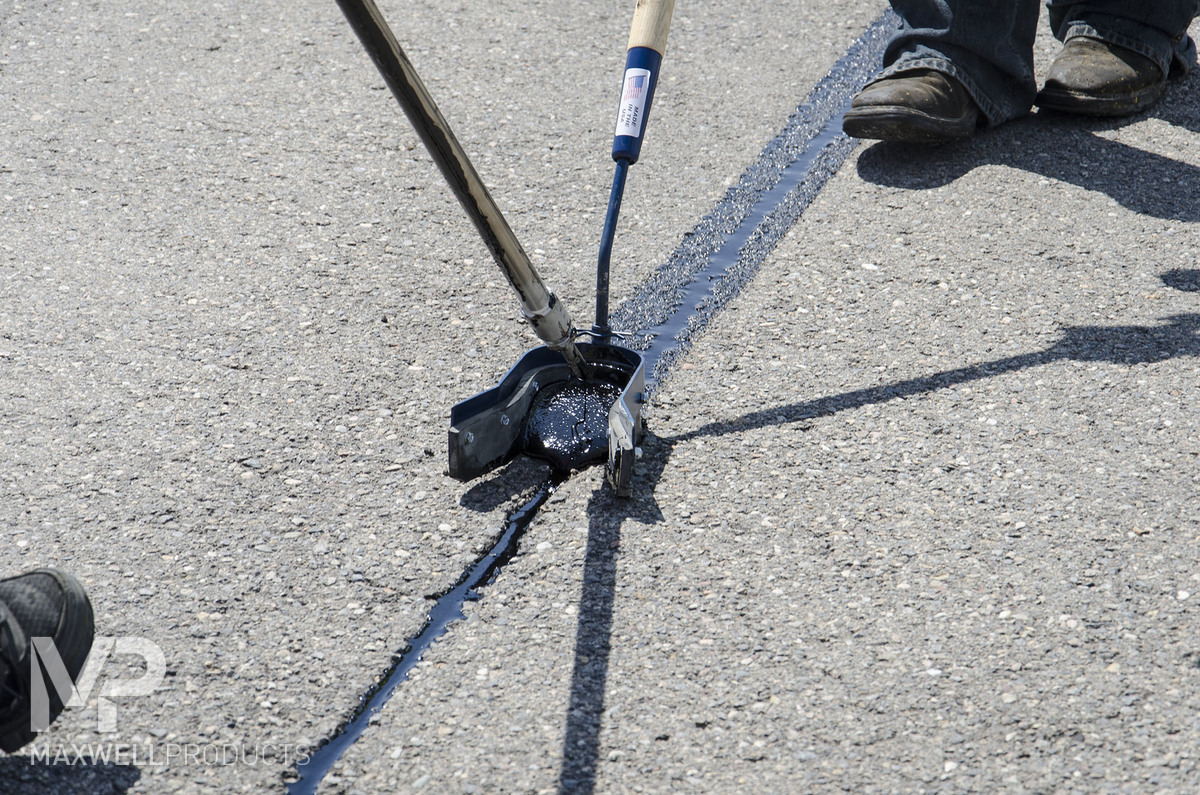
Tell us the pavement condition and the climate it sits in, and we will tell you whether sealing is still the right treatment
Talk to us800.266.2090
maxwellproducts.com