
Reading the damage
Pavement fails in stages. Each stage has a repair that works, and a point past which it stops working.
What each stage looks like on the ground, and the material that belongs there.
Published October 29, 2021 · Updated September 30, 2026
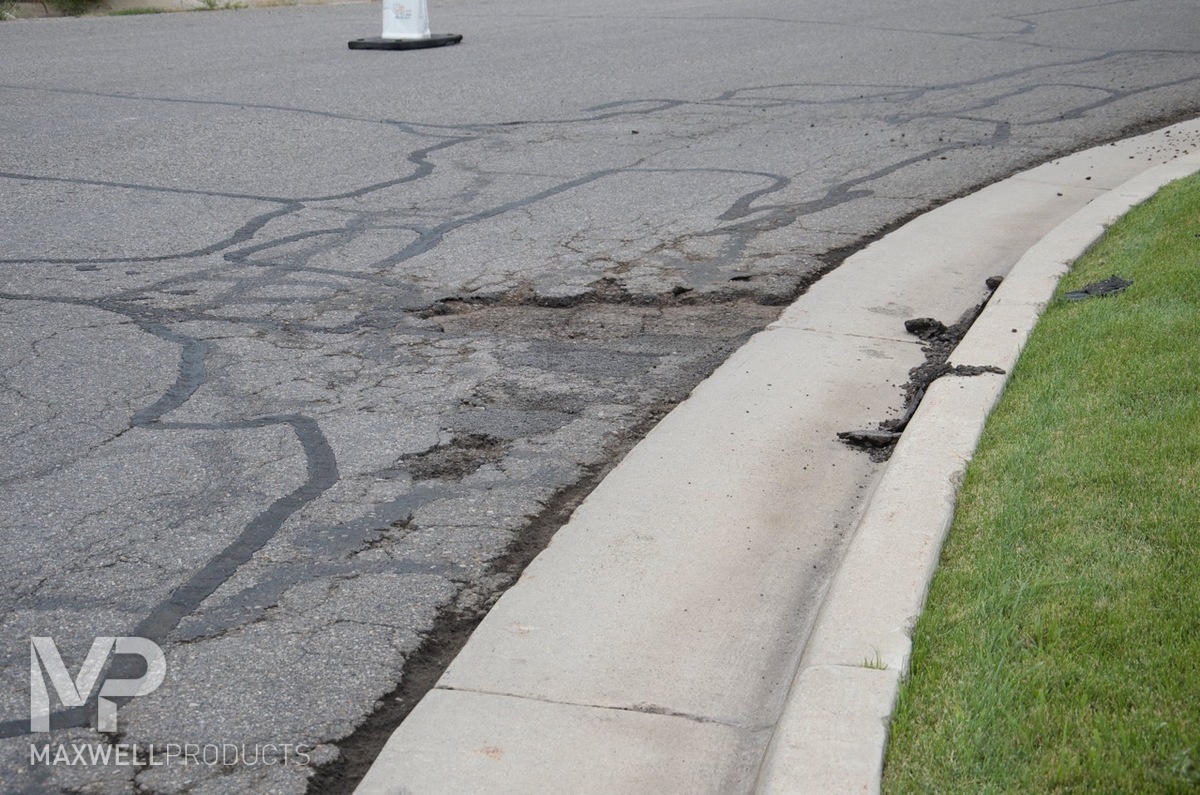
Every distress on a road started as something smaller and cheaper to fix. The material that would have worked at each stage costs a fraction of the one needed at the next.
What follows is the progression as it appears on a job, and the repair that belongs at each point: including the point where the cheaper answer stops being the cheaper answer.
It starts narrow
Narrow cracking is the cheapest problem a pavement will ever have, and the only one where doing nothing carries an obvious price. An open crack takes water into the base. The base softens, the pavement above loses support, and in winter that water freezes and wedges the crack wider than it was.
Sealed early, the crack stops being a route into the structure. Elastoflex and Nuvo crack sealants are built for this: flexible enough to move with the pavement rather than pull away from it.
The crack outgrows the sealant
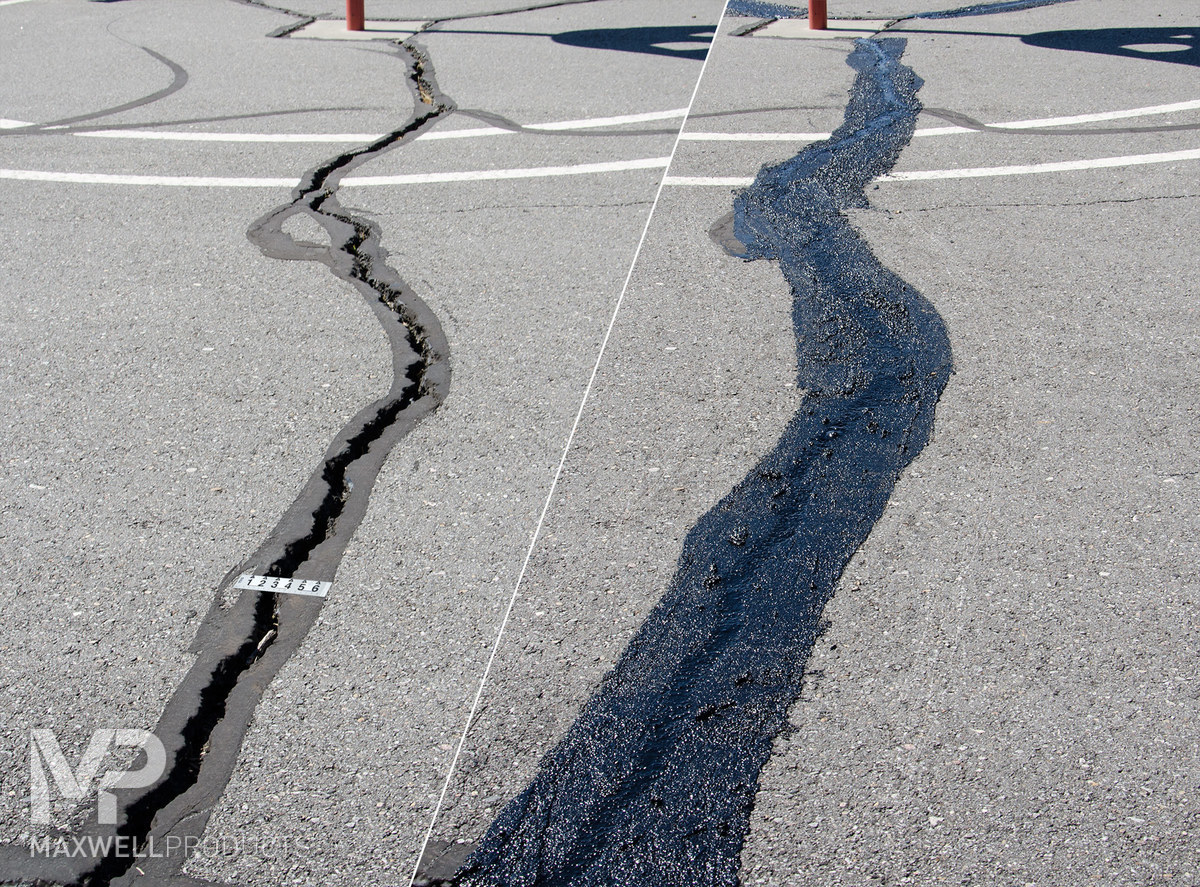
There is a width past which crack sealant stops being the right answer. It sags, tracks out under traffic, or disappears into the void no matter how much you pour. That is not a product failing: it is a repair asked to do a job it was not built for.
GAP Mastic is built for that job. Hot-applied and carrying engineered aggregate in a heavily polymer-modified binder, it fills width and depth instead of bridging over them, and crews can work and smooth it before it sets.
A crack only reaches this width because it is moving a long way through the year, so flexibility is what the repair needs most. That is why this stage is mastic work and the later ones are not.
| Crack width | Treatment | Material |
|---|---|---|
| About 0.2 to 0.7 in | Crack sealing, routed first | Elastoflex or Nuvo |
| About 0.2 to 1 in | Crack filling, cleaned only | Elastoflex or Nuvo |
| Wider than about 1 in | Mastic | GAP Mastic |
The surface loses its shape
Cupping and shallow depressions mean the problem has moved below the surface. Water has been reaching the base long enough to erode it, and the pavement above has settled into the space left behind.
These are no longer linear repairs: there is no crack to follow, only an area holding water and roughening the ride. GAP Mastic fills the depression back to grade and seals the surface against the water that caused it.

Why cold patch keeps coming back
Cold patch is a stopgap that gets treated as a repair. It is placed cold, compacted by traffic rather than by a crew, and bonds to the surrounding pavement only mechanically.
So the edges work loose, water gets back in behind it, and the hole reopens near where it was. The second visit costs what the first one should have.
Material goes missing
A pothole is where the pavement stops being continuous. Something has to carry a load across that gap, which is a different requirement from sealing one.
GAP Patch is a hot-applied patching material with engineered aggregate held in a polymer-modified binder. It goes in as a load-bearing repair that stays bonded to the pavement around it rather than working loose at the edges.

Past repairing in place
Some sections are beyond any surface treatment. The pavement comes out, the base is made good, and new material goes back in. This is the expensive end of the progression, and every stage above it exists to keep work off this list.
GAP Patch works here too, as the replacement material for a localized full-depth repair, on highways, rural roads and parking lots alike.


Most maintenance budgets are not lost on the wrong product. They are lost on the right product, used one stage too late.
| What you are looking at | What belongs there |
|---|---|
| Cracks of ordinary width | Elastoflex or Nuvo |
| Wide cracks, open seams, opened utility cuts | GAP Mastic |
| Cupping, shallow depressions and voids | GAP Mastic |
| Potholes, failed patches, settled castings | GAP Patch |
| Sections beyond surface repair | Full depth, GAP Patch |
Send us a photograph of the distress and the climate it sits in, and we will tell you which material belongs there
Talk to us800.266.2090
maxwellproducts.com