
Melter maintenance schedule
A melter in the shop is a crew standing around. Almost everything that puts one there is preventable, and most of the prevention takes minutes.
What to check every day, every week, and once a season, and what your melter's own manual has the final word on.
Published September 13, 2018 · Updated September 30, 2026
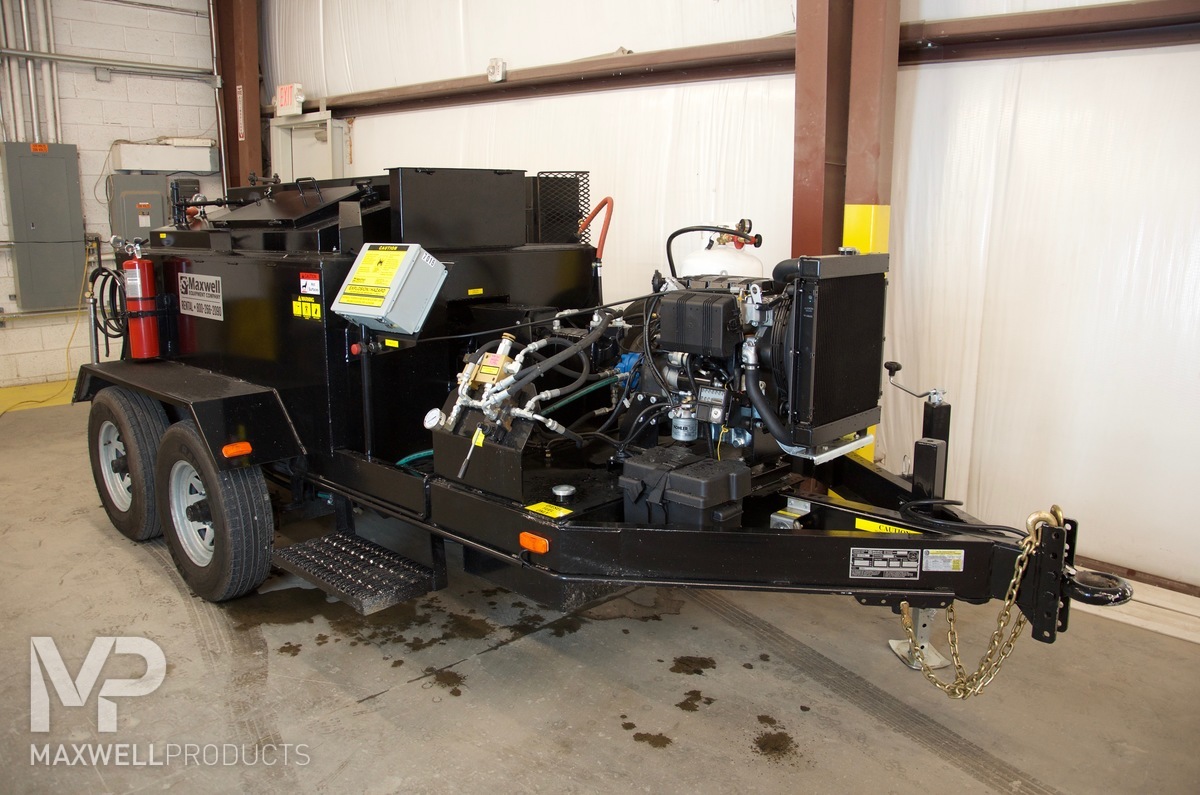
A melter, or kettle, works in dirt, dust and hot material, gets loaded and towed every day, and is expected to come back and do it again tomorrow. Nothing about that environment is kind to machinery.
Which is the argument for the list below. It is not long, and none of it takes as long as a day in the shop.
“There's a lot of dirt, dust, and gunk around the working environment, so it's hard on [the equipment]. Proper maintenance will help the machine last a lot longer.”
Rob Van ArsdaleEquipment manager, Maxwell Equipment Company
The schedule is the whole article
Melter maintenance is not complicated and it is not judgment-heavy. It is a short list of things done on a rhythm, and the failures that put a machine in the shop are mostly the result of the rhythm slipping rather than of anything going dramatically wrong.
The table below is that rhythm. Everything after it is the detail behind a line in it.
| How often | What | Why it matters |
|---|---|---|
| Every day | Clean it down, inside and out | Soot covers the sensors, displays and gauges you rely on |
| Every day | Check the product pump packing | Tighten or add packing before it leaks, not after |
| Every day | Load blocks at shutdown | Absorbs the transfer oil heat and gives you a head start |
| Every week | Grease the pump and agitator bearings | The cheapest part of the machine to look after |
| Every week | Inspect the hoses | A hot sealant hose failure is a serious injury, not a delay |
| Every month | Check the vents | Blocked venting is a safety problem before it is a performance one |
| Every month | Check the fire extinguisher | Insurance requires it; the job requires it more |
| Each season | Fluids and filters together | Oil, coolant, transfer oil, hydraulic oil, and the filters with them |
| Ongoing | Log hours on wear parts | Replacing on schedule is planned; replacing on failure is not |
Fluids, filters and hours
Check the fluids before you run: motor oil, coolant, transfer oil, hydraulic oil. Each one at its recommended level, each one changed on its own schedule.
Where a manual does not give you a figure, ours run motor oil at roughly 200 to 250 hours and transfer oil at roughly 1,000 to 1,200 hours, which is once or twice a season for most crews. Change the filters when you change the fluid they serve, the motor's air filter, the fuel filter and the hydraulic oil filter, because doing them separately means doing the same job twice.
Wear parts want a log rather than a memory. Hours in service against the manufacturer's replacement interval is the whole record, and it turns an unplanned breakdown into a planned afternoon.
The end of the day
Every use leaves material on the machine. Heat a flat putty knife and scrape it off while it will still come away cleanly, and take the soot off the outside as well: it settles on the sensors, displays and gauges, and a gauge you cannot read is a gauge you stop checking.
Then load it. Blocks of sealant added at shutdown absorb the heat still in the transfer oil instead of letting it go to waste, and the machine starts tomorrow further along than it would have.
What goes in matters here too. PolySkin™ blocks are fully meltable and go straight from the pallet into the melter, so there is no box to cut open at the machine and nothing left over to carry out and dispose of.
Sealant melters and mastic melters differ
On a crack sealant melter, the daily item is the product pump packing, add and tighten as it needs it, and the pump itself is a wear part on roughly a 1,000 to 1,500 hour cycle. Check the hoses regularly for fraying and cuts, and replace a damaged one immediately rather than at the end of the day.
On a mastic melter, the equivalent daily item is the packing gland on the agitator shaft. And leave the agitator running in transit: GAP Mastic and GAP Patch carry aggregate, and aggregate that is not kept moving does not stay where you want it.

If it is smoking black
Two common causes. The first is electrical: check the battery and the alternator, and replace whichever has gone.
The second is soot in the burner head or the air cone, restricting air flow. Clean both out and the flame gets the air it needs. Either is cheap now and expensive to ignore.
Every item on this list takes less time than the shortest day a melter ever spent in the shop.
Tell us what you are running and we will tell you what it wants
Talk to us800.266.2090
maxwellproducts.com