
Quality, controlled
Every batch of every product is measured against its own spec sheet before it leaves, and on GAP Mastic and GAP Patch, some of what gets measured is the rock.
What a spec sheet is really promising, and what has to be true before a batch is allowed to leave.
Published November 16, 2018 · Updated September 30, 2026
Pavement work is unforgiving of a bad batch. The material goes into a crack in the ground, under traffic, in the weather, and if a batch were wrong, nobody would find out until putting it right had become expensive.
So the question worth answering is not whether a product meets its specification. It is how anyone knows it does.
The raw material
Before it is madeIngredients are chosen against the specification the finished batch will be measured by, not against a price.
The formula
Before it is soldDeveloped and proven in the laboratory, then placed in the field under real conditions before it becomes a product.
The material
Every batchSampled several times over, tested against the limits printed on its own spec sheet, and not released for sale until it passes.
The aggregate
Every batchIn GAP Mastic and GAP Patch the rock is specified and tested as well, not only the binder around it.
The record
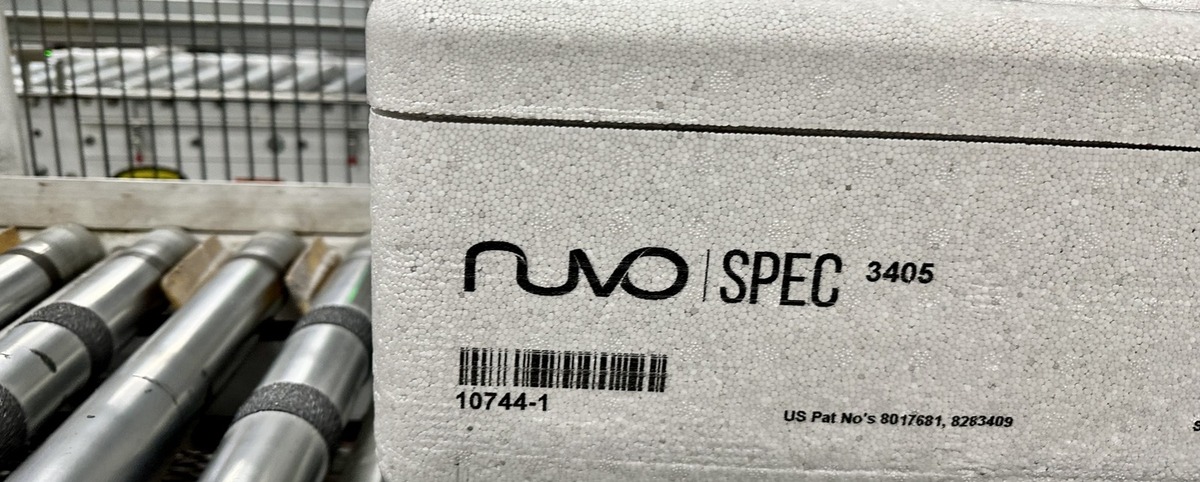
After it shipsEverything hangs on the batch number. The test results are recorded against it, every pallet ID is tied to it, and every pallet is assigned to the order it ships on.
It starts with what goes in
Quality control is usually a station at the end of a line: make the material, then check it. Ours is not one station. It runs the length of the process, and the first place it shows up is purchasing.
Raw material is chosen for what it is rather than what it costs, from suppliers we have used long enough to know, and the specification a batch will eventually be measured against is already in view when the ingredients are ordered. A cheaper input that forces a correction later is not cheaper.
That is what Quality-First™ names: control at every step of the thing rather than a verdict at the end of it.
“We only select high-quality raw materials. We always look for premium ingredients. We develop strong relationships with reliable, reputable suppliers, and we never choose price over the quality of materials.”
Jared PringleOperations manager, Maxwell Products
The laboratory is the product
Every hot-pour sealant looks the same coming out of a kettle. Black, hot, thick, and nothing on the outside tells you which one will still be holding the crack in five years.
The whole difference is inside it. A sealant can carry dozens of ingredients, with hundreds of interactions between them, and it gets complex very quickly: nothing can be changed on its own, because everything is touching everything else. We have spent more than fifty years of polymer chemistry learning which combinations are worth having, and we are learning more every day.
Polymer-modified is not a distinguishing claim: it has been standard for decades. The work is in which polymers, in what combination, and what they do to the properties that matter at the temperature the material will actually live at. That is decided in a laboratory years before a crew ever sees it.
Think about what one crack asks of the material in it over a single year. On the coldest night it is at its widest, pulling hardest at whatever is holding it. When the thaw comes there is water standing in it for weeks. By August the sun is on it all day. And on the afternoon it was filled, the lane had to reopen before the crew had finished loading up.
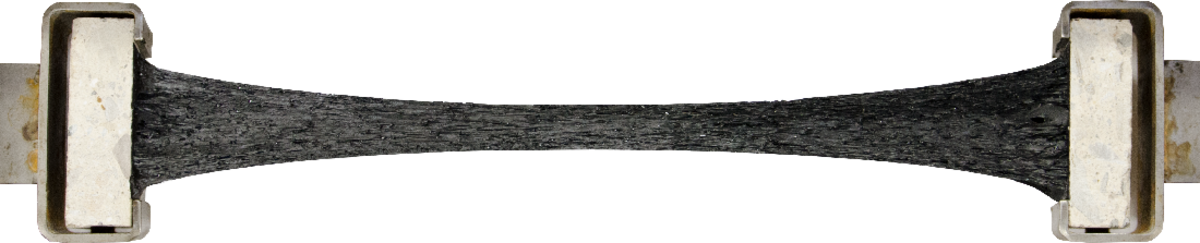
One material has to be good at all of that at once, and the properties that decide it pull against each other. That is the work, and every one of those properties has a test behind it on the spec sheets, at a stated temperature and by a named method. Which is how anyone can tell whether the work landed, rather than taking our word for it.
“Research and development is really one of our core products. We invest heavily in our laboratory because our business is working with customers to solve problems. Collaboration with customers, sales, and the lab has led to our best products.”
Ken MaxwellChief executive, Maxwell Products
“Maxwell Products provides me the opportunity to apply the expertise, knowledge, and abilities I have acquired and make contributions to the industry. I love the fact that one day I could be out on the road helping clients with their problems whereas the next day I can be in my office working with a team of talented people trying to solve a complex, technical problem.”
Weijie Ren, PhDPolymer engineer, Maxwell Products
The rock is doing real work
GAP Mastic and GAP Patch carry engineered aggregate, and the rock is not a filler. It does real structural work in the repair, which means the wrong rock produces one that looks right and fails early.
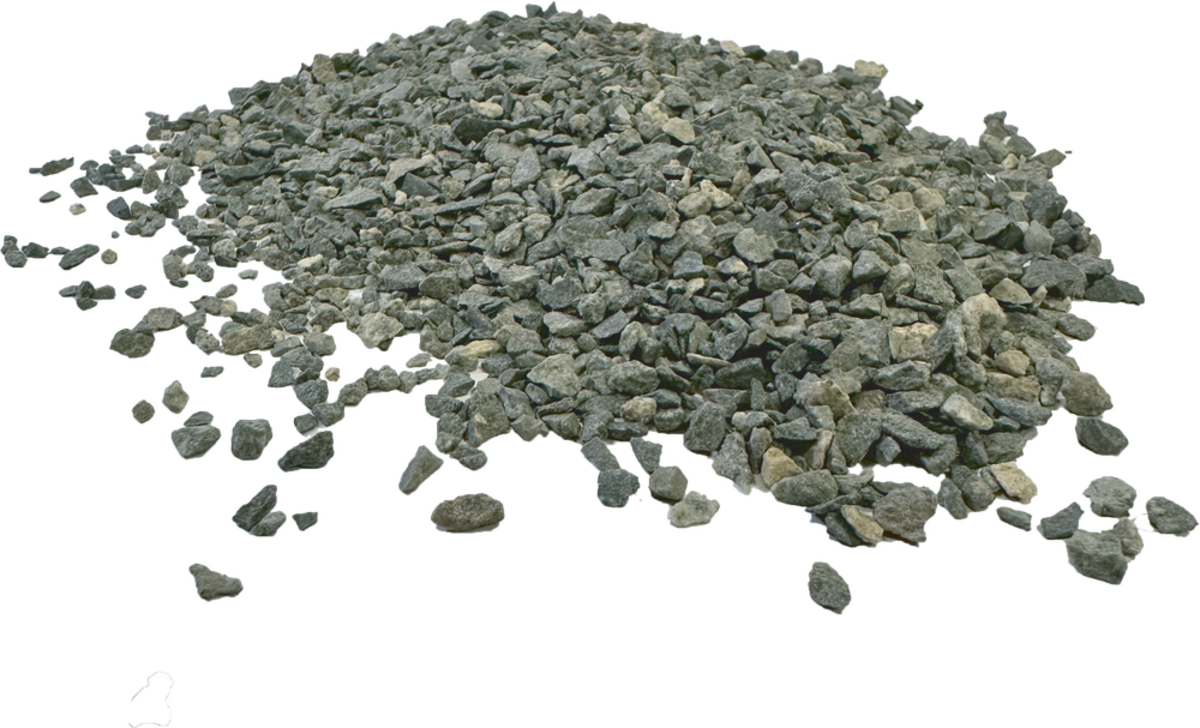
Aggregate can be too soft. It can fracture under load, or polish smooth under traffic and take the friction surface with it, or break down chemically. What makes a repair carry weight is how well the particles lock against one another, and that is governed by their shape, their angularity and their size distribution.
It is also washed. Dirt on a particle is a layer between the rock and the binder, so the binder never gets hold of the rock itself, and a repair full of dirty aggregate is a repair with a weak surface everywhere inside it.
And it is chosen to be strong for its weight rather than simply strong. A heavy particle wants to settle through hot binder toward the bottom of the kettle; a lighter one of the same strength stays suspended, so the material that comes out of the hose is the material that went in. How heavy a particle is for its size, and how much it takes up, are what that choice is made on. The grading and the shape of the rock are measured too, because a blend that packs and particles that bite are what make the repair carry weight.
Angular, fractured, graded
This is what goes into GAP Mastic and GAP Patch. The faces are freshly fractured rather than rounded by a river, which is what lets the particles bite into each other instead of rolling past.
Size distribution matters as much as shape: a graded blend packs, a single size does not.
“Degree of Interlock is affected by so many things about the rock, the shape, the size, the cleanliness, resistance to impact, soundness. It's amazing how much the aggregate affects those things.”
Mike GuymonMaterials engineer, Maxwell Products
Every batch
A formula that passes in the laboratory is not yet a product. New material is put down in the field, under real conditions, before it is sold, because a pavement does things to a sealant that a test cabinet does not.
Once it is a product, every batch is sampled several times over and each sample is tested against the limits on its own spec sheet. The batch is not released for sale until it passes, so material that does not meet its own specification never reaches a customer. The tests depend on the material: bond and tensile adhesion for how it holds to the crack wall, cone penetration and softening point for how firm it is hot and cold, ductility, flexibility and resilience for how far it moves and whether it comes back, flow and viscosity for how it behaves going in.
And the record does not stop at the loading dock. Every batch has a number, and everything else hangs off it. The results of all that sampling are recorded against it. Every pallet ID is tied to it. Every pallet is assigned to the order it ships on, and the order names the customer.
Which means it reads from either end. A box found on a job site carries its lot number, and the lot number is the batch number, so what that material measured on the day it was made is already attached to the box in somebody's hand. Start instead at the batch and you reach every pallet, every order, and everyone who took delivery. So a question about material placed two summers ago has an answer, and if that answer ever mattered to anybody else, we know who they are without having to ask.
“What sets us apart is that we test everything before it leaves. We would never release an off-spec product to a customer. We never ship a product that doesn't meet specifications and our own high standards.”
Jared PringleOperations manager, Maxwell Products
Anyone can hit a number once. The trick is hitting it every time, and caring about hitting it even if nobody is ever going to check.
“Quality matters because our name is on the door and our reputation is on the line. Quality-First manufacturing creates longer-lived brands and a more valuable company.”
Ken MaxwellChief executive, Maxwell Products
Ask us what a batch measured, and we will tell you
Talk to us800.266.2090
maxwellproducts.com