
Three tips for better crack sealing
Three things decide whether a seal lasts: when you do it, how you prepare the crack, and what you put in it.
Timing, preparation and material choice, and what the published guidance says about each.
Published September 13, 2018 · Updated September 30, 2026
Crack sealing is not complicated work, but it is unforgiving work. A seal that fails early usually failed for one of three reasons, and all three are settled before the material leaves the kettle.
The guidance below comes from the Illinois Center for Transportation and the Federal Highway Administration, plus what our own crews have learned since 1975.
Get the timing right
Two things about the weather decide whether a seal bonds: how warm it is when you place the material, and where the crack is in its annual cycle of opening and closing.
The Illinois Center for Transportation, in the field installation guidelines it produced for the FHWA pooled fund study on hot-poured sealants, is specific about both. Ambient temperature should be above 40°F and below 80°F. Spring and fall are the best times of year, because that is when cracks sit between their extreme closures and openings. Seal a crack at its widest and the sealant is overstretched when it closes. Seal it at its tightest and there is nowhere for the material to go.
The same guidance recommends pulling information from the nearest weather station before installation rather than judging by the day you happen to be on site.
| Climate | Sealant modulus | Likely ASTM D6690 type |
|---|---|---|
| Wet-freeze | Low modulus | Type II to IV |
| Dry, no freeze | High modulus | Type I to II |
Prepare the crack
Routing cuts a uniform reservoir at the top of the crack, giving the sealant enough width and depth to stretch as the pavement moves, and enough pavement surface to bond to. Without that reservoir a sealant has to accommodate the same movement across a much thinner section, and it separates or re-opens sooner.
We recommend a ½- to 1-inch wide by ½- to 1-inch deep rout, depending on how much ground movement your area sees. The Illinois guidelines give ¾ inch by ¾ inch as a worked example, and are firm that the rout must be square or rectangular: rounded and V-shaped routs, which come from worn or misaligned blades, have to be avoided. Cut a trial rout before starting the job and check the geometry against a block of the same dimensions.
Blade material matters more than crews expect. FHWA's manual of practice recommends carbide router bits over steel outright, and says to use only sharp carbide-tipped or diamond bits.
Then clean it. Debris, loose dirt, and moisture all stop a sealant from bonding. Use compressed air on the crack walls and the surface on either side, we recommend a 185 CFM compressor, and a wire broom for anything caked on. Where the crack is damp, a hot air lance cleans and dries in one pass, though it needs care: burning the pavement creates a worse problem than the one you started with.
“Routing is one of the best ways to ensure that your cracks stay sealed longer. When you rout a crack, even in a parking lot, and you cut that reservoir into the crack, it allows the crack to expand and contract better and allows the material to penetrate the crack deeper than it could by itself.”
Dave McIntoshMaxwell Products
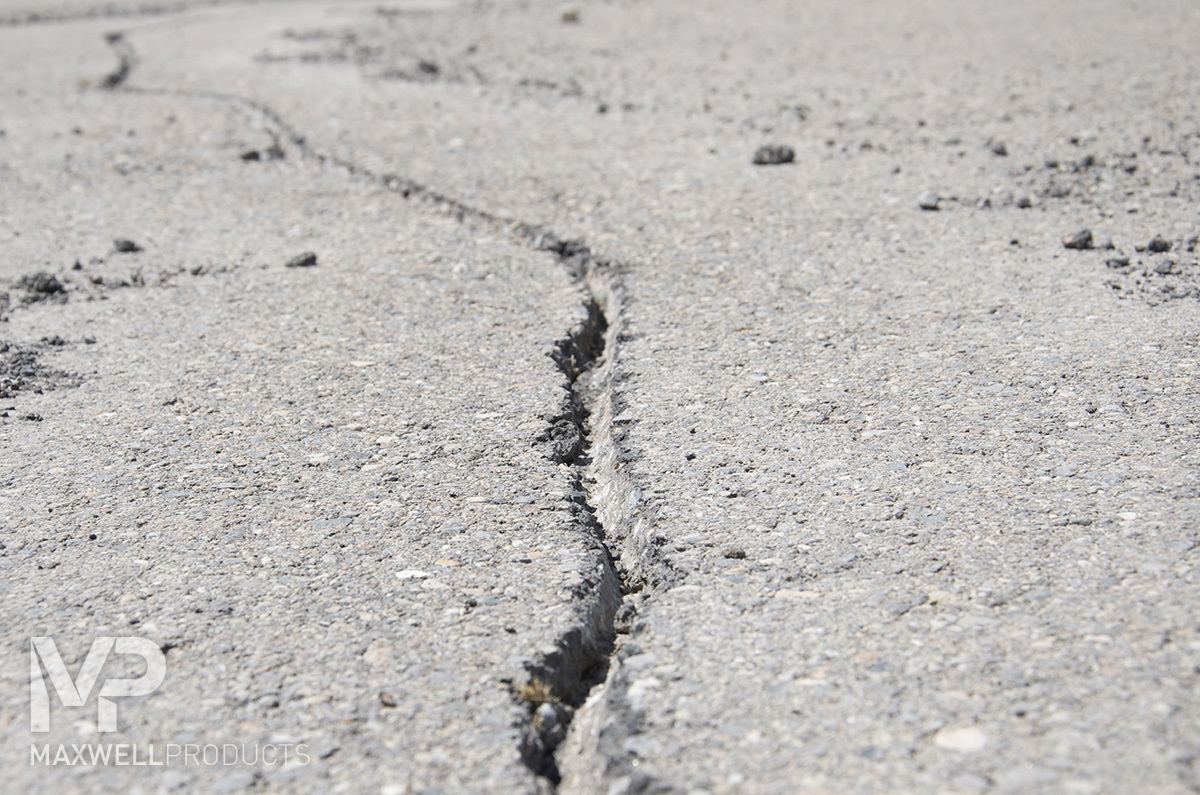
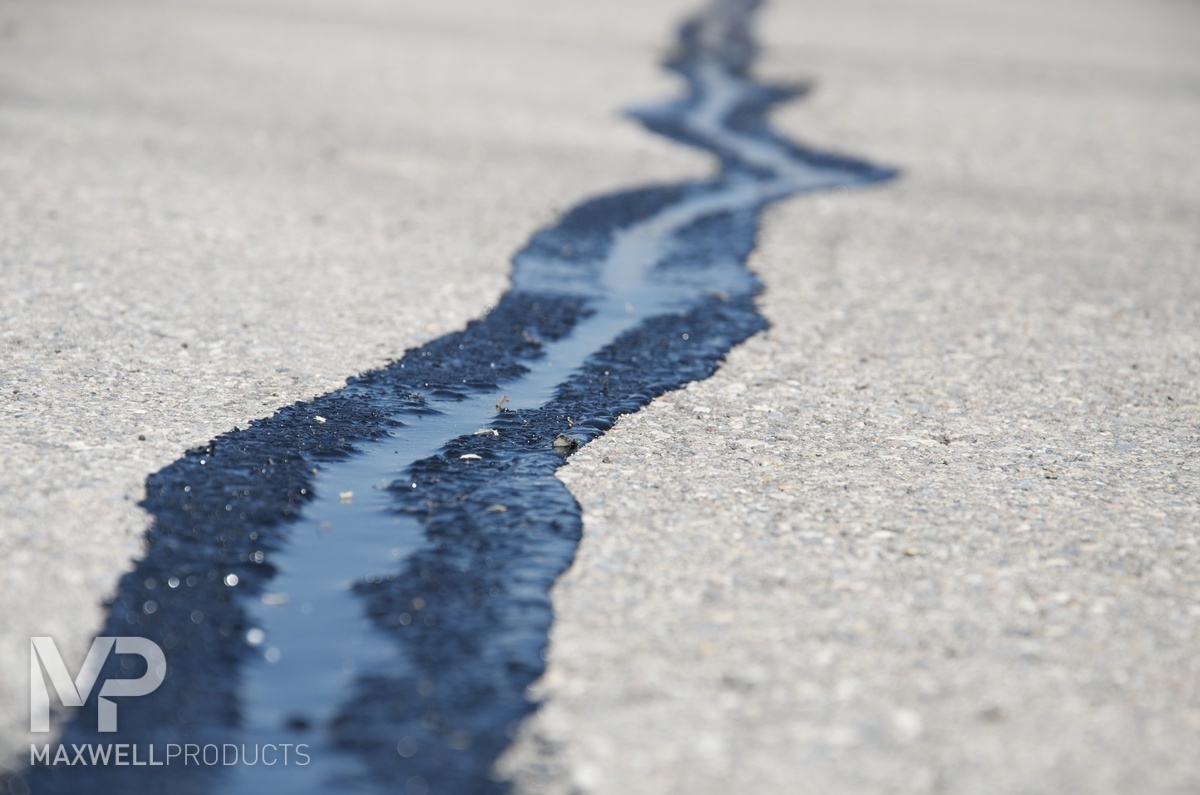
“The hot air not only blows out the crack and dries it, it also softens the binder in the pavement. So then the crack is cleaned, dried, and now sticky. The sticky crack now bonds better with the sticky sealant. You enhance the chances of a better seal.”
Rick StoneMaxwell Products
Flush fill first, then overband
An overband can go straight over a routed and cleaned crack, or it can go over a flush fill placed on an earlier pass. Neither is a requirement. The second is a choice about how to work, not a step you have missed.
Filling flush first helps combat excessive thermal contraction in the finished seal, so where contraction has given you trouble before, the extra pass earns itself back.
Choose the right material
The right sealant meets your local specification, accommodates the movement your pavement actually sees, and is formulated for your climate. Those are three different requirements and a product can satisfy one without satisfying the others.
There is also a decision before the product: sealing or filling. Sealing means routing first and is for working cracks, the Illinois guidelines define those as cracks moving more than 0.1 inch horizontally over a year. Filling is direct application into a cleaned crack, for cracks that move less than that. Treating a working crack as a filling job is a common and expensive mistake.
Width sets the outer limit. The guidance puts crack sealing at roughly 0.2 to 0.7 inches and filling at 0.2 to 1 inch, and notes that cracks wider than an inch call for a different treatment altogether, such as a mastic. Pavement already showing severe fatigue or block cracking is not a candidate for sealant either.
“If you choose the appropriate product for your geolocation, you'll get better performance in setup time, and the material will stay in place.”
Dustin BrownMaxwell Products
Past about an inch, no sealant will hold
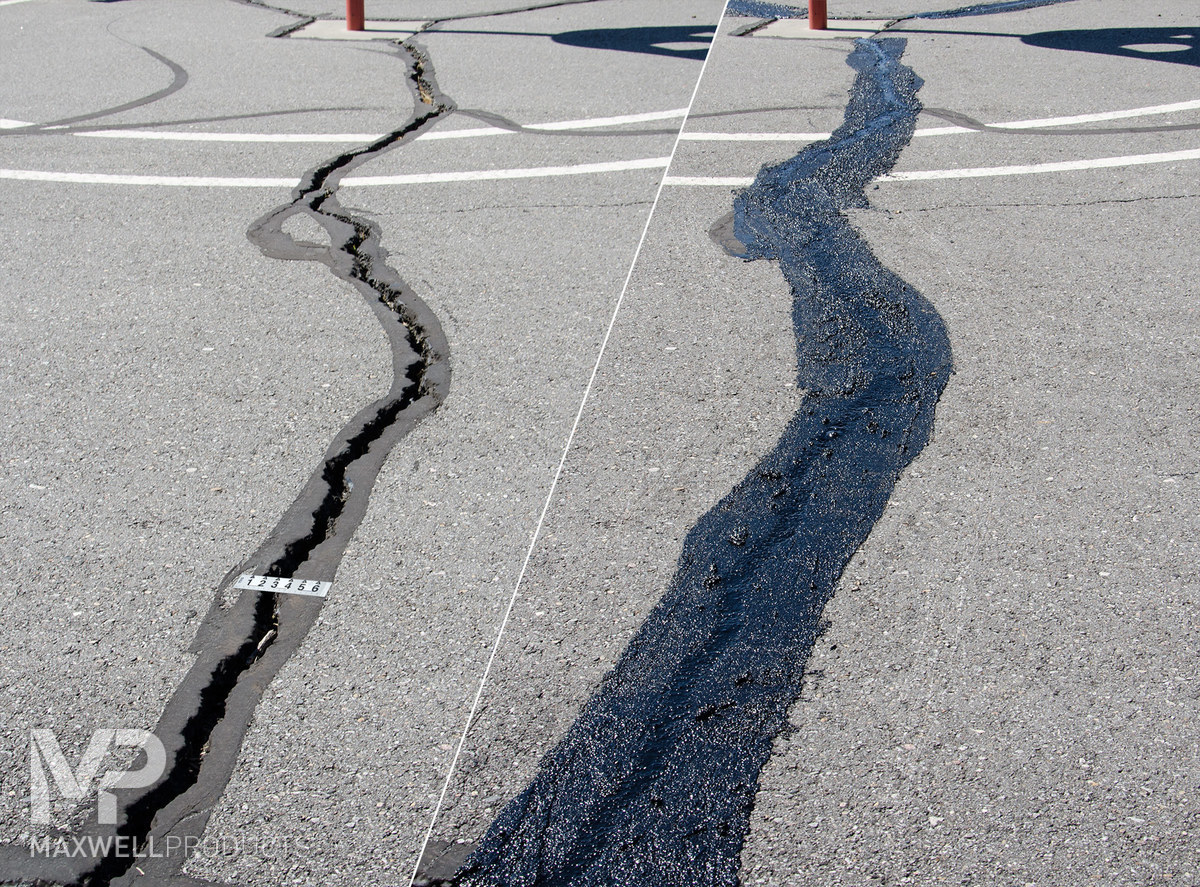
A crack wider than roughly an inch has outgrown sealant. Pour more in and it sags, tracks out under traffic, or disappears into the void. That is not the product failing: it is a repair being asked to do a job it was not built for.
That is the point where GAP Mastic takes over: hot-applied and carrying engineered aggregate, it fills width and depth instead of bridging across them. The same applies to pavement already showing severe fatigue or block cracking.
Nothing you do after the material leaves the kettle will fix a decision you got wrong before it.
Tell us your climate and what the pavement is carrying, and we will tell you which sealant belongs there
Talk to us800.266.2090
maxwellproducts.com