
Beat the pavement heat
In the hottest places we work, the air is above 100°F for a third of the year, not once in a record summer but every year, and the pavement in full sun runs hotter than the air above it.
What sustained heat and sun do to a sealed crack, and the things crews do differently because of it.
Published July 23, 2021 · Updated September 30, 2026
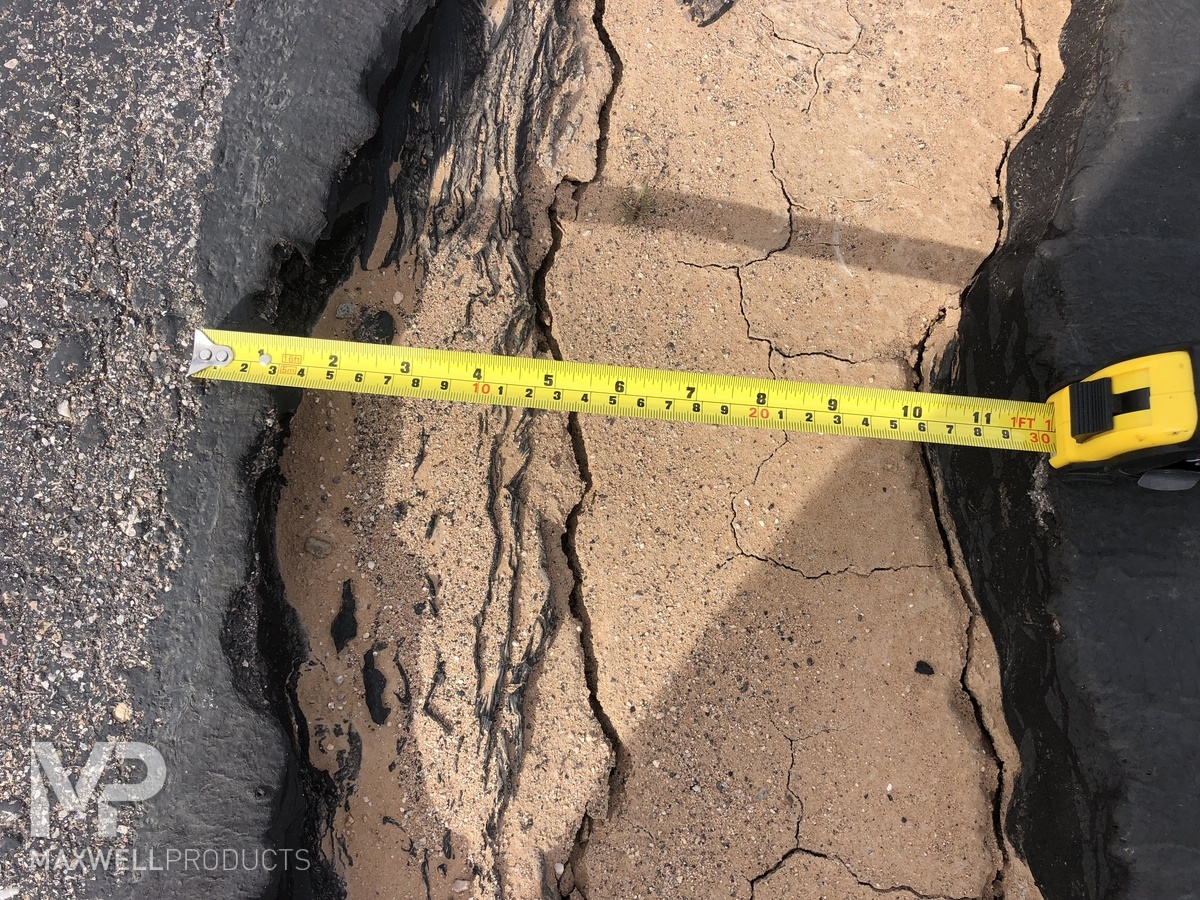
Heat does not break pavement the way frost does. It works slower, and it works on the binder, the part of both the road and the repair that is supposed to stay flexible.
Which means the hot-climate problem is rarely the afternoon you are standing in. It is the accumulated total of them.
How long the pavement is actually hot
A heat wave makes the news; a climate does the damage. The useful question is not how hot it got once, but how much of the year the surface spends hot, because oxidation is cumulative and every hot day adds to it.
The figures below come from our own climate data, built from NOAA daily records over a twenty-year window and the same data behind the climate tool. They are air temperatures. Pavement in full sun runs considerably hotter than the air above it.
The contrast is the point. A crew in Portland meets 100°F about twice a year. A crew in Palm Springs meets it on more than a third of all days, and meets 110°F more often than Portland meets 100°F at all. Those are not the same job, and they should not get the same material or the same schedule.
What the sun does to the binder
Asphalt binder ages by oxidizing, and ultraviolet light drives that reaction at the surface. The laboratory work is clear on the mechanism: exposing thin bitumen films to UV raises the carbonyl content and the viscosity together, and raising the UV intensity raises the effect. The same study is careful to say the pavement-scale magnitude has not been established, which is worth repeating, the direction is settled, the number is not.
What an oxidized binder does is get stiff. A stiff binder has less give, and a pavement with less give cracks when it contracts. That is why the hot-climate cracking you see is not the heat pushing the pavement apart: it is the heat and the sun spending years making the binder brittle, and the ordinary nightly and seasonal contraction then doing what it always did, to a surface that can no longer stretch with it.
The same thing happens to what you put in the crack. A sealant or a mastic sitting in full sun is being aged by it, and the ones that hold up are the ones carrying something that absorbs the radiation harmlessly.
“UV light can oxidize organic compounds, which makes asphalt-based products brittle. If you have less polymer and more tire rubber, then the materials are not as affected by the sun. They stay flexible, and you can even tell by the appearance of the product. They stay darker, blacker. Tire rubber has a higher percentage of carbon black.”
Mike GuymonMaterials engineer, Maxwell Products
The heat does not pull the pavement apart. It spends years making the binder brittle, and then the ordinary nightly contraction does what it always did, to a surface that can no longer stretch with it.
Working in it
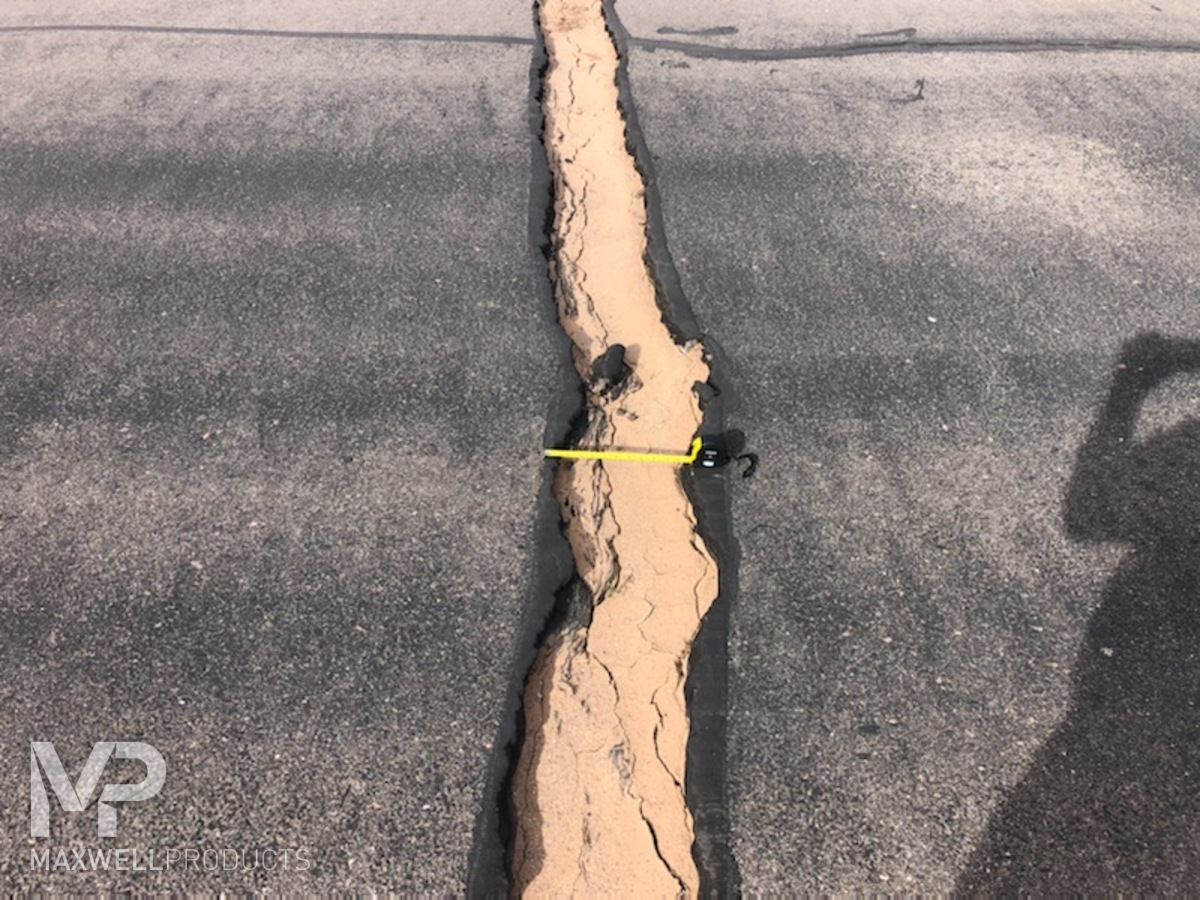
Most of what changes in hot weather happens in the hours after the material goes down rather than in the specification. Hot-applied materials stay hot longer when the surface they are placed on is already at 130°F or more, and a surface that stays soft longer is a surface that tracks.
Tracking is the first thing to plan for. When asphalt-based material stays soft under traffic, it picks up on tires, and the binder and aggregate can separate under the combination of heat and mechanical force. Something has to go between the tires and the material, Tak-Less™ or another detackifier for sealants, topping stone for GAP Mastic and GAP Patch, or the traffic has to wait.
The second is time to traffic itself. Some sealants are formulated to set up fast enough that the wait is short even in summer. Where it is not short, cooling the material deliberately is a legitimate step rather than a workaround: Derek Pham, quoted below, has seen Caltrans run a street sweeper over a repair with the brushes off and the water on, and put ice on patched potholes to get the lane back sooner.
“The hottest weather we've worked in was Palm Springs, 115 degrees. At the time, we set up traffic control till [the material] sets up. If we're in a hurry we throw sand on it, especially with high traffic. When it's super hot like that, detak or water with soap doesn't do anything. It's just better to set up traffic control. Usually in hot weather below 100 degrees, cracks under one (1) inch, detak or water with soap is enough.”
Derek PhamSuperintendent, Global Road Sealing of Southern California
Topping stone earns its place twice
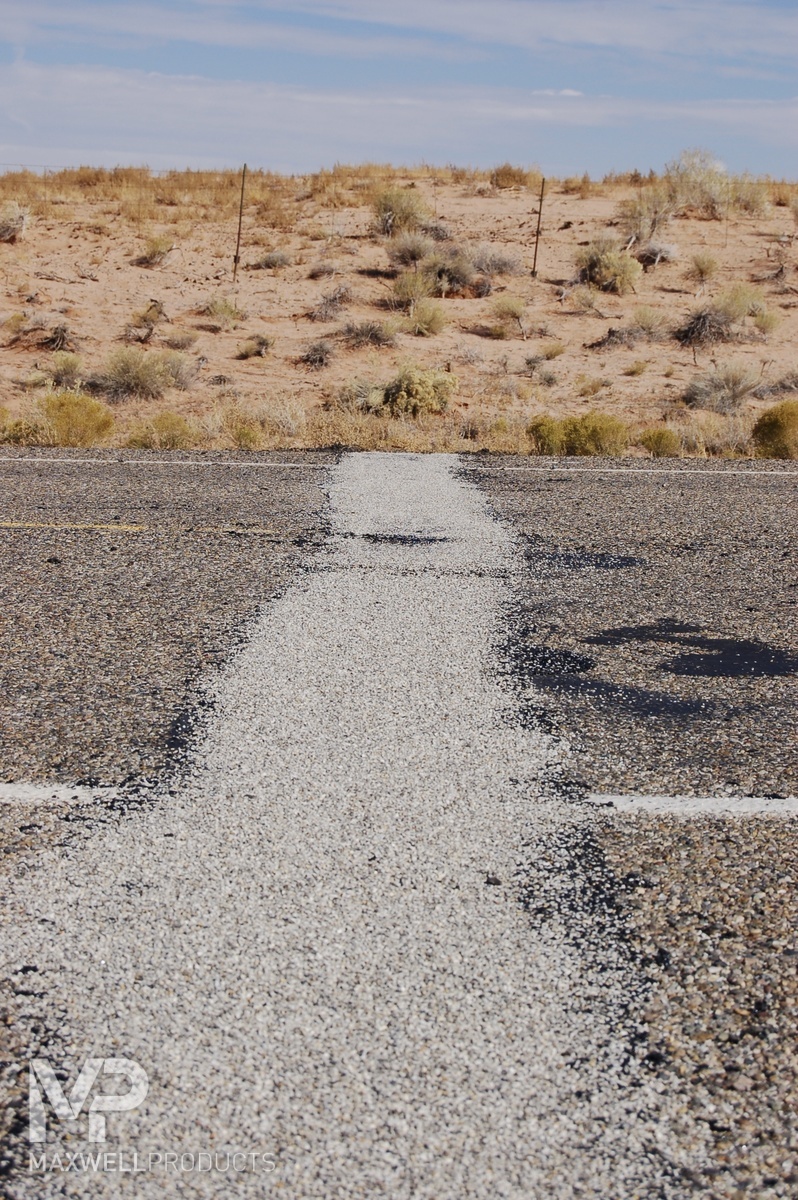
We recommend topping stone on GAP Mastic and GAP Patch installations generally, and in hot weather it does two jobs at once: it keeps the material off tires while it is still soft, and it puts a wearing course over the repair that shades the binder underneath from the sun.
Spread it while the surface is still hot, the GAP manual says 285 to 300°F, and work evenly across the repair with a bucket, shovel and broom. If the stone sinks below the surface, the material is still too soft: wait for it to cool further and carry on. Pre-heating the stone in a wheelbarrow gives the most even result.
“Fixing the wide cracks in the summer time not only will help with ride quality, but will also give the cracks water protection when the fall rain storms start.”
Chris RobbSales representative, Nevada, Maxwell Products
| What the heat is doing | When it matters | What to do about it |
|---|---|---|
| Oxidizing the binder | Over years | Specify for the climate; treat damage early |
| Keeping material soft | Hours after placement | Tak-Less on sealant, topping stone on GAP Mastic and Patch |
| Extending time to traffic | Same day | Fast-setting sealant, traffic control, or cool it |
| Exposing the repair to sun | Over years | Topping stone, then a surface treatment |
Hot is not one number
A material specified against the hottest hour of the hottest day is specified against something the pavement never really sees, because pavement takes days to warm through rather than an afternoon.
Our planning figures use the hottest sustained three-day stretch for that reason, and take the temperature a four-year install is expected to meet rather than an average year.
Tell us where the job is and what it carries, and we will tell you what belongs in that crack
Talk to us800.266.2090
maxwellproducts.com