
When crack sealing isn't enough
Between the widest crack a sealant can hold and a full repave lies a range of damage with no obvious treatment, and an enormous jump in cost.
What GAP Mastic and GAP Patch are each built for, and where the line between them sits.
Published November 2, 2018 · Updated September 30, 2026
Sealing works until the crack is too wide to hold sealant. Repaving works but costs orders of magnitude more. Most pavement distress sits between those two, and for years there was nothing sensible to put on it.
That middle ground is what GAP Mastic and GAP Patch are for. Neither replaces paving; both buy years before paving is needed.
The range nobody had a material for
A traditional maintenance program has two tools. Seal the cracks, and when the pavement is too far gone, repave. The distance between those two, in both condition and cost, is enormous.
The Illinois Center for Transportation's field installation guidance, produced for an FHWA pooled fund study, puts the boundary in numbers: crack sealing suits widths of roughly 0.2 to 0.7 inches, crack filling up to about an inch, and for cracks wider than that it recommends other treatments, naming mastics specifically. It also rules sealant out on pavement already showing severe fatigue or block cracking.
So the boundary is not a marketing line. Past it, more sealant does not help: it sags, tracks out under traffic, or disappears into the void. What the damage needs is a material that fills width and depth rather than bridging across them, and that is a different product.
GAP Mastic, for width and area
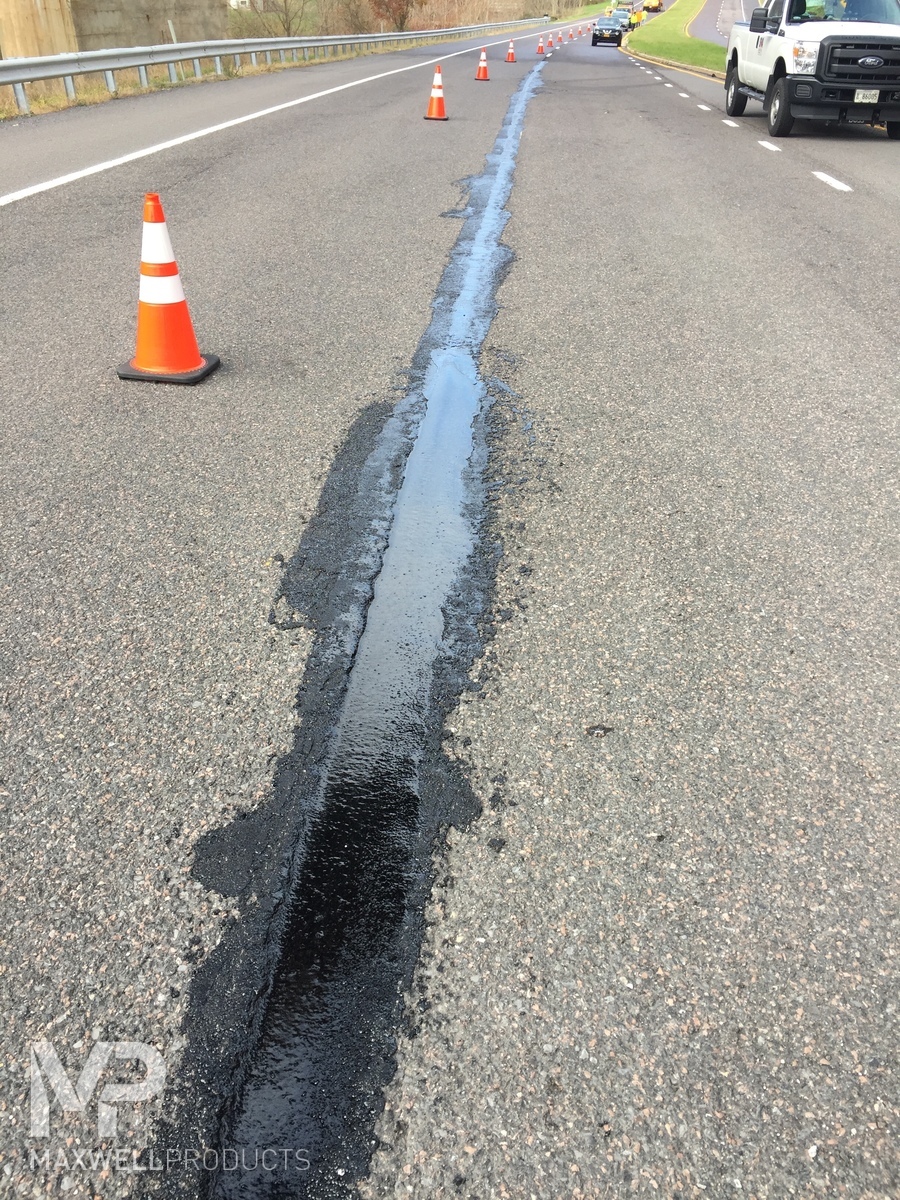
GAP Mastic is a hot-applied material for wide cracks, open seams, shallow cupping and depressions, fatigue cracking, and small voids, the distresses that are too big to seal and nowhere near bad enough to repave.
It carries engineered aggregate in a heavily polymer-modified, thermoplastic binder, and the comparison that matters is not against other mastics. It is against what actually gets used on this damage: a hot mix asphalt patch, or a shovel of cold patch. Neither of those stretches.
That is the whole difference. A repair with no give in it, sitting in a crack that opens and closes every year, has nowhere to put that movement, so it debonds at its own edges and you are back to a crack, this time with a seam around it. A heavily polymerized binder stays flexible through the same cycling, so the repair moves with the pavement instead of fighting it, and inteliBond™ forms a thermal bond with the pavement around it that seals water out rather than relying on friction.
It is formulated to run into the crack and the voids beside it rather than bridging over them, which is what stops a repair from sitting on top of a problem it has not actually filled. Crews can work, smooth and adjust it before it sets.
A wide crack is almost always mastic work rather than patch work, and the reason is movement. A crack only gets that wide because it is moving a long way as the pavement expands and contracts through the year, so whatever goes in it has to stretch further than a patching material is built to. Mastic is the more flexible of the two. Patch is the one that carries load.
The formulation is aimed at maximum flexibility without giving up stability: a repair that moves with the pavement but still holds its shape under traffic rather than shoving, rutting or tracking.
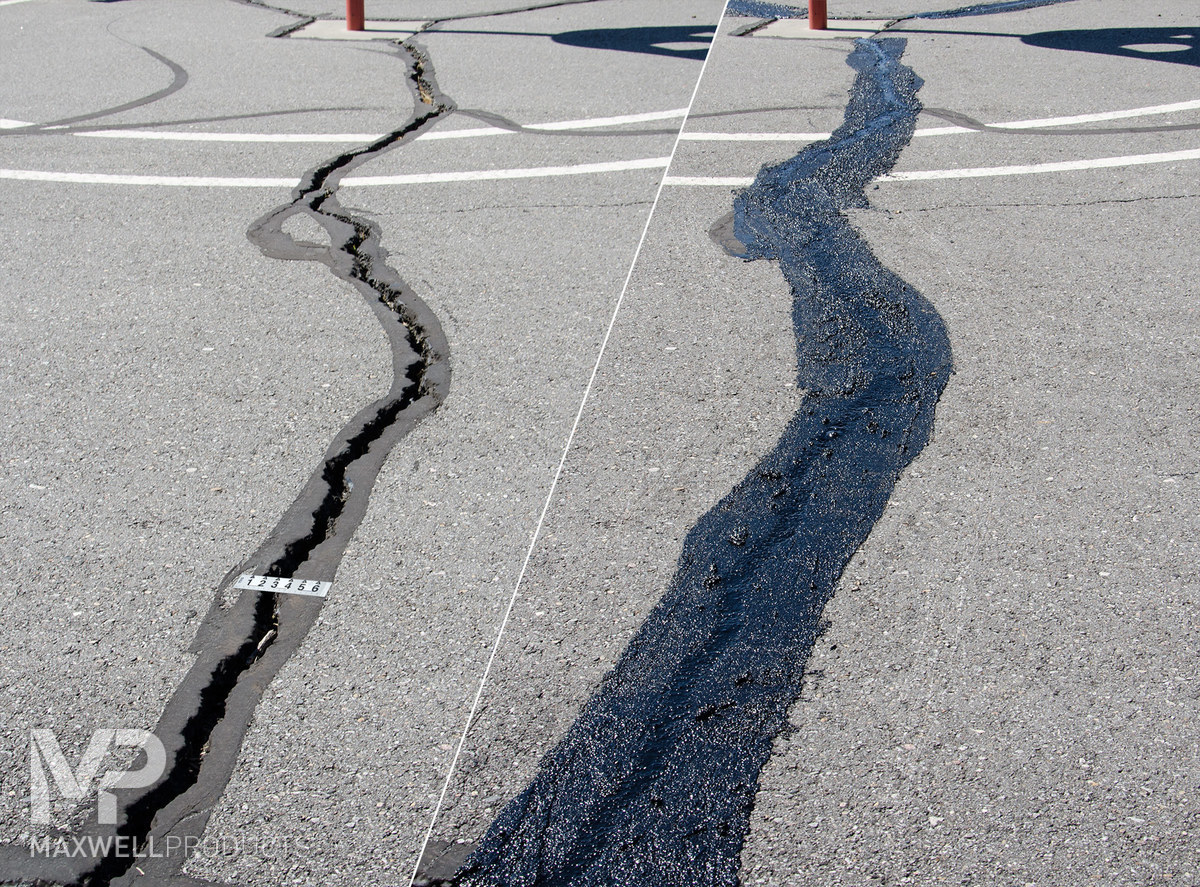

“The GAP Mastic material we used in late November has performed real well. The results are far better than the conventional material used to seal the crack. The longitudinal, wide crack was a real problem to bicyclists and motorists traveling along Woodside Road, and it seemed to swallow anything we used to seal it. The GAP Mastic material adhesion to the sides and the stretching capabilities of the material has kept the material in place.”
Raymundo EliasRetired Area Superintendent, Caltrans District 4
Seams, shoulders and the edges of things
The same properties suit the joints and edges where pavement meets something else: longitudinal seams that have opened, deteriorating shoulders, the line where a lane meets a gutter.
These fail early because they were always the weakest line in the surface, and they are exactly where water gets in.
GAP Patch, for where pavement is missing
A pothole is a different problem from a wide crack, and it asks for the opposite property. A wide crack needs a material that moves; a pothole needs one that carries. The pavement is no longer continuous, and something has to bear a wheel across the gap. Sealing a hole does not make it structural.
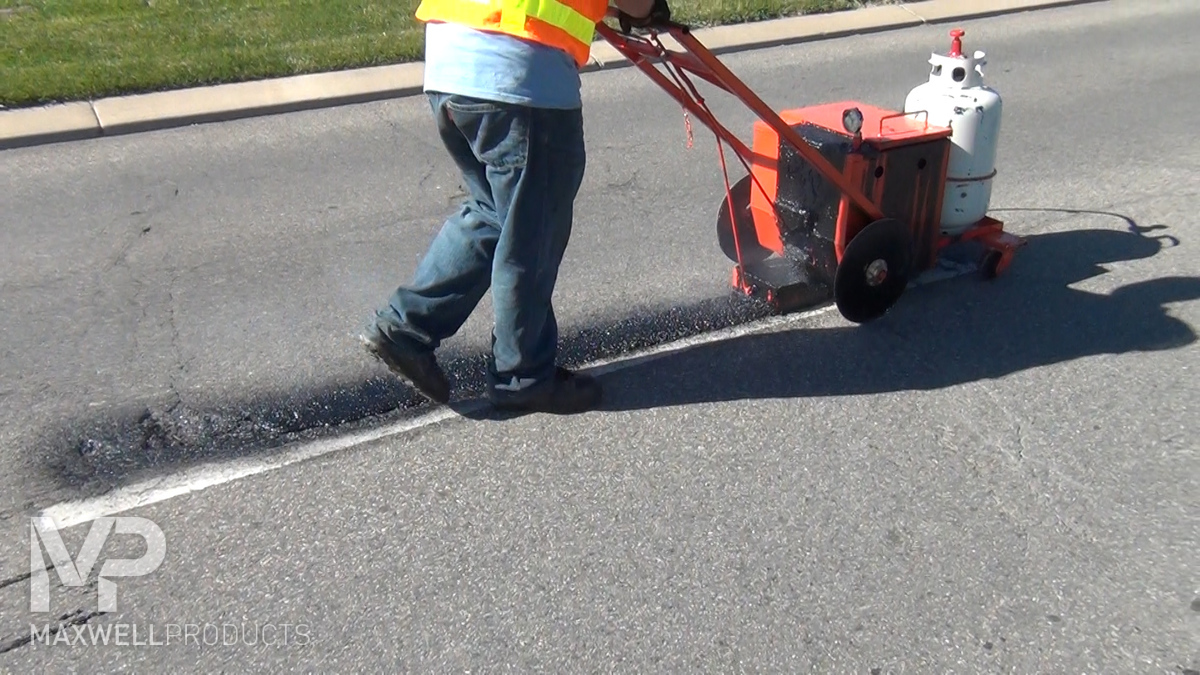
GAP Patch is a hot-applied patching material built for that: high-strength engineered aggregate suspended in a polymer-modified thermoplastic binder, placed hot so it bonds to the pavement around it rather than merely sitting in it.
That bond is what separates it from cold patch. Cold patch is compacted by traffic instead of by a crew and holds to the surrounding pavement only mechanically, so its edges work loose, water gets in behind it, and the hole reopens near where it was. A hot-applied patch that is bonded and cohesive does not ravel out in the first week.
The same reasoning covers the places where pavement meets something rigid and has settled away from it. A drain casting left standing proud is a drop every wheel finds, and an open edge for water on all four sides. Bringing the pavement back to grade around it is patching work, not sealing.
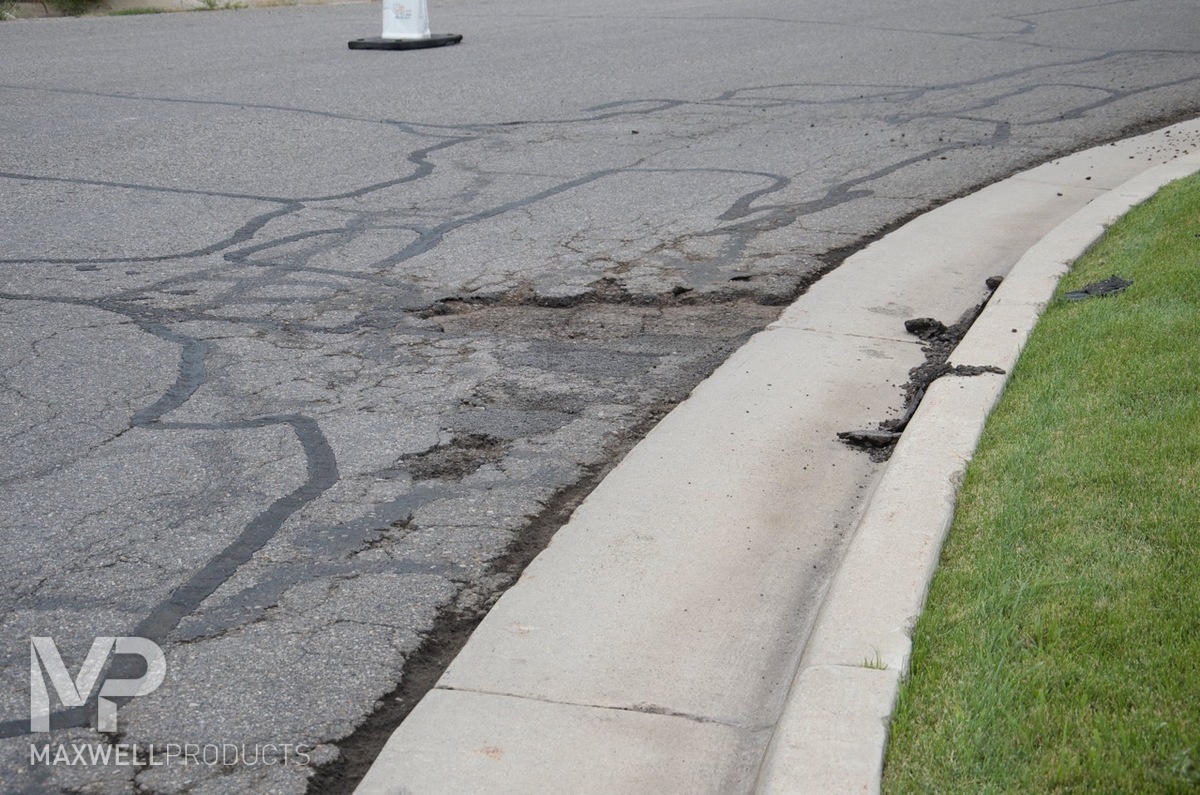

“The GAP Patch material used on Lee Road 159 is performing extremely well. The area has been slipping for some time; however, where GAP Patch was applied, the material is holding the asphalt overlay together and has stopped the slippage. The surrounding area continues to slip.”
R. Buzz Powell, PhDAssistant director and test track manager, National Center for Asphalt Technology, Auburn University
A patch with no give in it, in pavement that moves, has nowhere to put the movement. That is why it comes back.
A repair, not a filler
Both of these are placed as permanent solutions rather than temporary fillers. That is a statement about intent and about how the repair is made, hot, bonded, load-carrying, not a promise about a number of years.
It has a practical consequence the manual points out: work a crew does once is work a crew is not standing in traffic to do again. The exposure saved is part of what the repair is worth.
| What you are looking at | Treatment | Material |
|---|---|---|
| Cracks up to about 0.7 in | Crack sealing | Elastoflex or Nuvo |
| Cracks up to about 1 in | Crack filling | Elastoflex or Nuvo |
| Wider cracks, open seams, shoulders | Mastic | GAP Mastic |
| Cupping, depressions, fatigue cracking | Mastic | GAP Mastic |
| Utility cuts that have opened and raveled | Mastic | GAP Mastic |
| Potholes, failed patches, settled castings | Patching | GAP Patch |
| Sections beyond surface repair | Full depth | GAP Patch |
Where it has been used
GAP Mastic and GAP Patch have been used by state agencies, municipalities and airports in Utah, California, Minnesota, Nebraska, Washington, Wisconsin and Idaho.
If you want to know how either behaves in your climate and under your traffic, that is a question worth asking us directly rather than reading off a data sheet.
Send us a photograph of the distress and the climate it sits in, and we will tell you which material belongs there
Talk to us800.266.2090
maxwellproducts.com